
Questions
Your result
—
—
A sample allocation for this profile
| Asset class | Illustrative weight |
|---|
What a bad year could look like
What we would talk about next
Want a copy sent to you?
Optional — your result is already on screen. If it is useful to have it in writing, we will email it across along with a short note on what it means.
Why this matters
Tolerance is not the same as capacity
Risk tolerance is how you feel when the market falls. Risk capacity is how much of a fall your plan can survive without changing your life.
They are often different, and the smaller of the two should usually win. Someone who is emotionally comfortable with a 40% drop but retires in three years does not have the capacity for one.
Answer honestly
Not how you think you should feel — how you actually behaved the last time markets fell hard. That is the only useful data.
Your answers stay in your browser. Nothing is sent to us unless you choose to email yourself the result.
All investing involves risk, including the possible loss of principal. Sample allocations shown here are illustrative only, are not a recommendation to buy or sell any security, and do not reflect fees, taxes, or your individual circumstances. Diversification and asset allocation do not assure a profit or protect against loss. Past performance is not a guarantee of future results.
What this risk tolerance assessment measures
A risk tolerance assessment estimates how much investment ups and downs you are comfortable living with. This one asks eight short questions about your goals, time horizon, experience, and how you would react to a market decline, then places you in a risk profile and shows an illustrative asset allocation for that profile.
Risk tolerance versus risk capacity
Your result measures tolerance: how you feel about risk. A full plan also looks at capacity: how much risk your finances can actually absorb given your timeline, income, and goals. The two can differ, and a good allocation respects both.
How to read your risk tolerance result
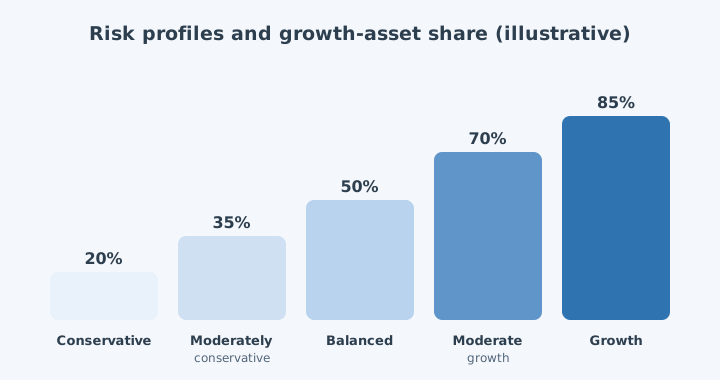
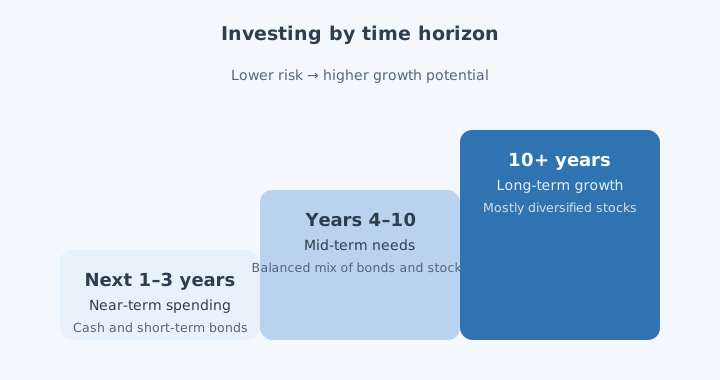
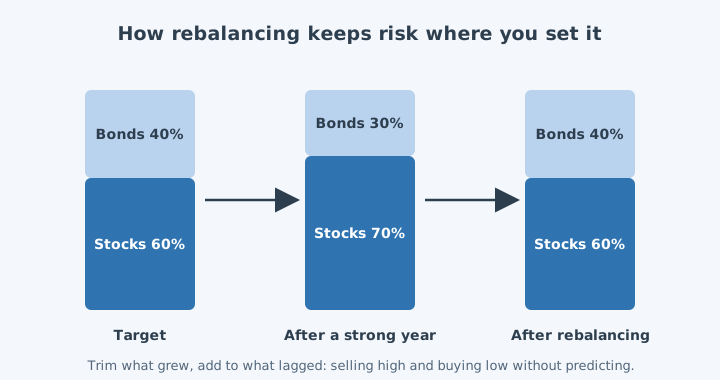
Each profile, from conservative to growth, pairs with a sample mix of growth assets such as stocks and more stable assets such as bonds and cash. The sample is an illustration, not a recommendation: your own allocation should reflect your full situation, taxes, and the money you will need soon.
The SEC’s investor education site, Investor.gov, explains asset allocation and diversification in plain language.
Risk tolerance assessment FAQ
How often should I retake a risk tolerance assessment?
Whenever your life changes in a big way, such as nearing retirement, a large inheritance, or a change in health, and every few years otherwise. Tolerance can shift with age and experience.
Why does my result differ from my current portfolio?
It often does. Many portfolios drift over time or were never set deliberately. If your result and your actual investments disagree, that gap is worth a conversation; our investment planning starts exactly there.
Is this the same as the Color of Money Risk Analysis?
No. This is a quick eight-question check. The 11-question Color of Money Risk Analysis is part of our Fact & Feeling Finder, which we use when building a full plan.
Now let’s put it in context
A profile is one input. Your timeline, taxes, income needs, and family situation are the rest. Bring your result to a complimentary visit and we will build the whole picture.